
It’s October, which means spooky season is here! I figured it might be fun to dive into a few ship-based horror movies this month, in a series I’m calling Horror Movie Monday.
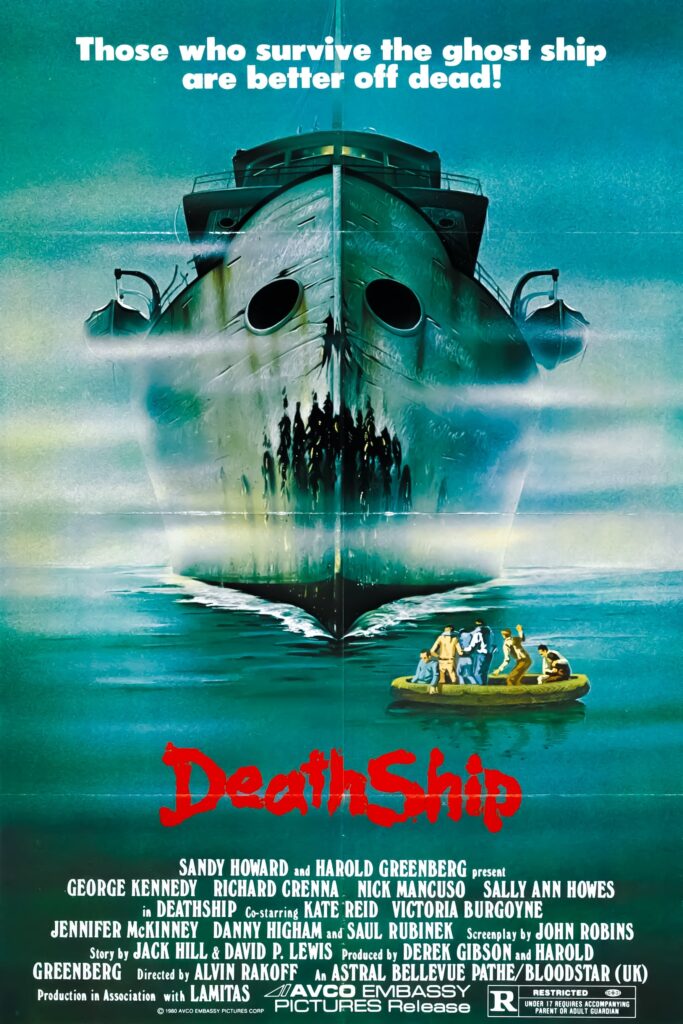
First up is a somewhat obscure flick starring George Kennedy and Richard Crenna: Death Ship from 1980. Directed by Alvin Rakoff and based on a story by Jack Hill and David P. Lewis, it flopped at the box office but has since clawed its way into cult classic status.
Fair warning: this review contains spoilers and a good amount of snark.
Plot Summary
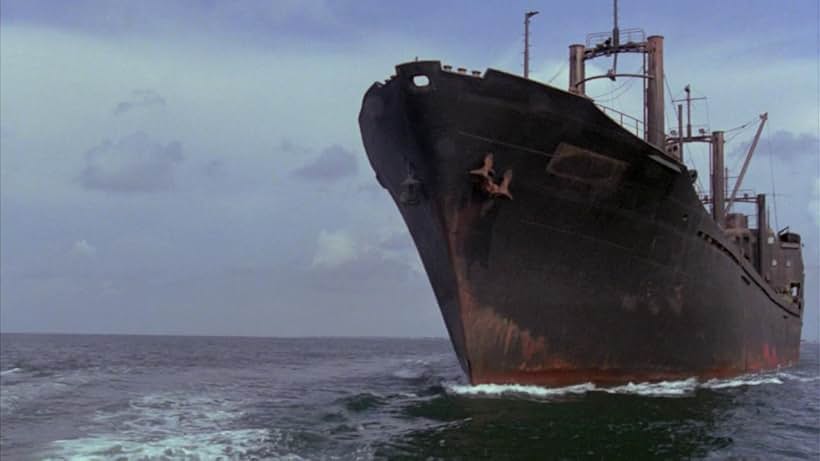
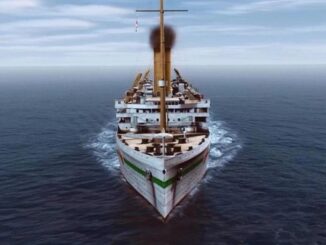
The movie opens with shaky shots of the ocean and a decrepit, black-hulled freighter. The scene cuts to the ship’s bridge, where a disembodied German voice issues orders over a loudspeaker. It’s ominous. It’s atmospheric. Unfortunately, it’s also one of the film’s most coherent moments.
Meanwhile, aboard a cruise ship (the crew uniforms suggest it’s the Empress, though the name’s never given), we meet Captain Ashland. George Kennedy plays him in full grump mode. Ashland loathes his job, despises his passengers, and barely tolerates his crew—and in three days, he’s due to be replaced. His successor, Captain Trevor Marshall (Richard Crenna), is onboard to observe operations before the handover.
As night falls, a costume party is underway, complete with unsettling close-ups of masked dancers and canned 70s disco music. The Marshalls—Trevor’s wife Margaret and their two kids—are introduced, as is a small supporting cast who exist solely for future body count purposes. A British passenger named Lori sneaks off with Officer Nick for a steamy rendezvous, while ominous camera work reminds us that something terrible is approaching.
That terrible something arrives in the form of the massive, black-hulled freighter plows straight into the cruise ship. The crew makes frantic attempts to evade, but the collision happens anyway, thanks in part to some awkwardly spliced footage from the 1960 disaster film The Last Voyage. Within minutes, the ship goes down.
By dawn, a handful of survivors—the Marshalls, Lori, Officer Nick, shipboard entertainer Jackie, and Mrs. Morgan—are adrift in a lifeboat-thing. Somehow, everyone survived the sinking despite the fact that they were in different parts of the ship. Captain Ashland eventually surfaces, as if he spent the night underwater like Aquaman.
The survivors drift directly into the path of the mysterious freighter, which looks suspiciously unscathed for a ship that just obliterated another. A lowered gangway beckons—because it’s a horror movie, they go aboard. The ship appears deserted…but is it? A window opens by itself and quickly closes again.
Almost immediately, strange things start happening. The ship’s machinery operates on its own, and before long, Jackie is hoisted by a crane, dunked in the water, released, and quickly drawn into the propellers where he’s chopped to pieces in the least gruesome way possible. Captain Ashland begins hearing German voices and slipping further into madness, while Officer Nick suffers a tackle block to the head and falls 15 feet through steel beams, only to wake up later like nothing happened.
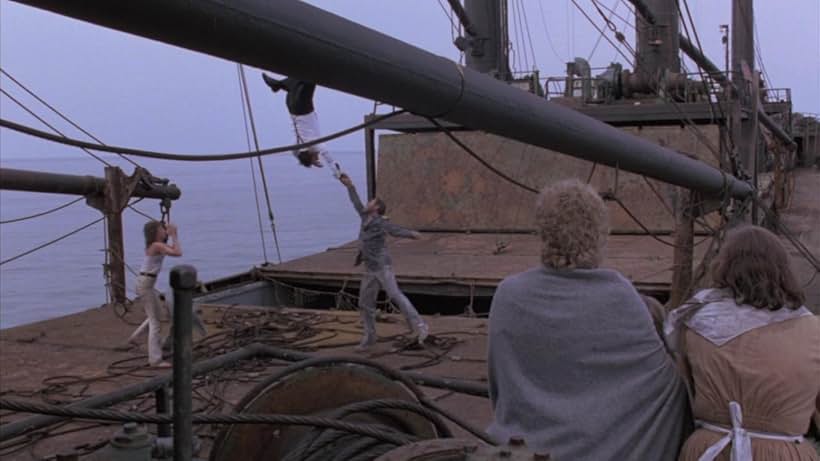
Possessed by the ship’s evil spirit and now sporting a Kriegsmarine officer’s uniform, Captain Ashland descends fully into madness. He strangles Mrs. Morgan, tosses Lori overboard, and declares himself master of the ship. Meanwhile, Marshall and Nick stumble into a torture chamber, then inexplicably into a projector room where newsreels of Adolf Hitler play on a loop. Continuity and spatial logic are abandoned entirely as the full horror of the ship is revealed.
The freighter is an old Nazi interrogation ship. They uncover swastika banners, gold teeth, propaganda posters, and decomposing corpses scattered throughout the vessel. One of the film’s rare horror moments arrives when a giant net filled with human remains rises from the cargo hold as Nick watches in horror, screaming. Moments later, he dies.
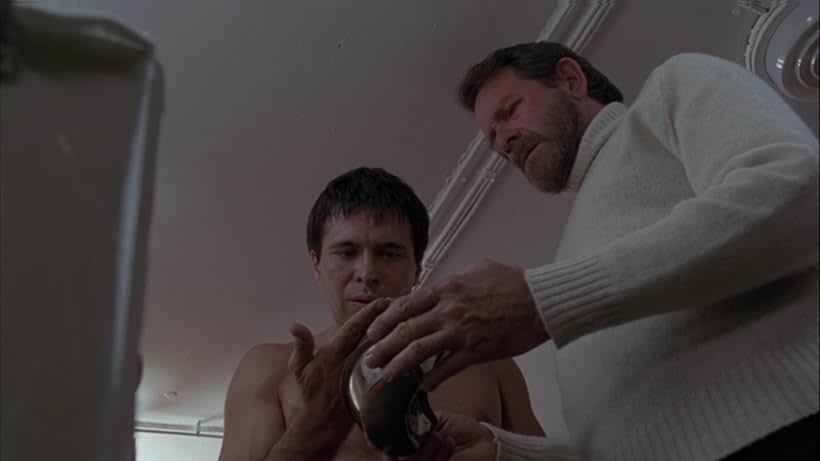
The possessed Ashland, declaring that the ship needs blood to survive, is stabbed in the chest during a delirious confrontation with Trevor in the captain’s quarters. He collapses and is seemingly killed. Seemingly.
In the frantic escape that follows, the Marshalls come across a giant freezer filled with Allied servicemen’s corpses and an improbably still-functional life raft. On deck, gunshots ring out. “No one leaves my ship, Marshall!” Captain Ashland shouts as he fires a rifle at the family. “No one!” Turns out he isn’t dead after all. In the end, the family launches a raft and flees as the freighter sets its sights on a new cruise ship.
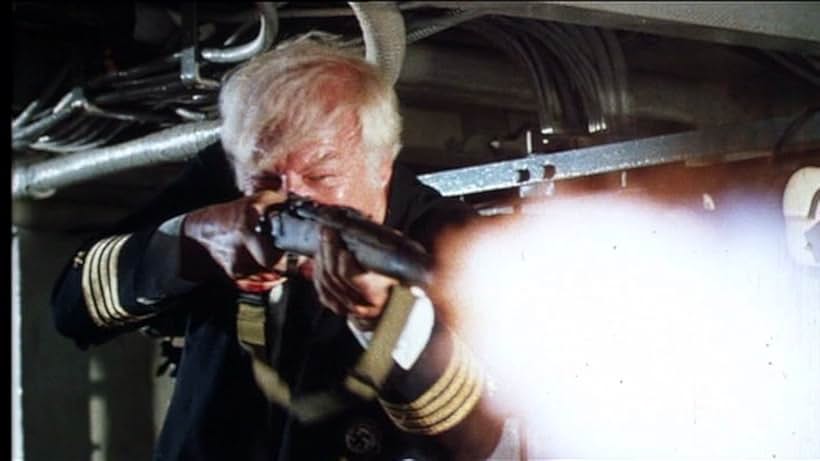
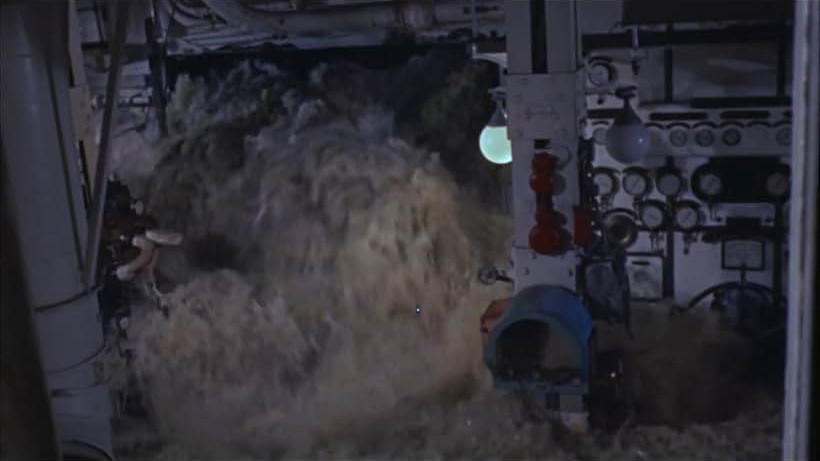
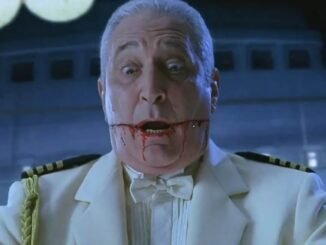
Ashland, furious at losing control of the ship, descends fully into madness. He shoots up the bridge equipment. Not satisfied, he goes into the engine room and starts shooting the machinery too. The ship, naturally, doesn’t like that and knocks him onto a giant turning gear when nearby equipment sparks up. Captain Ashland screams as he’s slowly torn to pieces.
The Marshalls are eventually rescued by a Coast Guard helicopter, and the freighter continues its cursed voyage, crashing into its next victim.
My Review
Well…where to begin?
The premise is fantastic: a movie about an evil, sentient Nazi prison ship should be entertaining. It should be good. But Death Ship wastes its potential at nearly every turn. The biggest issue is the editing, which is a mess. Characters teleport from room to room, injuries disappear, and the layout of the ship makes no sense whatsoever.
The pacing is atrocious. For long stretches, nothing happens. When the film finally delivers some action, it’s often clumsy or strangely bloodless for a horror movie. Moments that should shock—like the net of corpses or Captain Ashland’s gruesome death—fall flat, undone by clunky direction and bargain-basement effects.
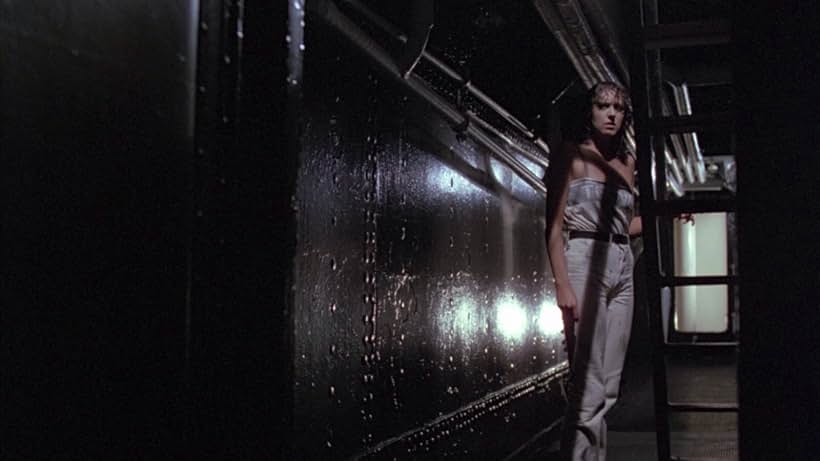
That said, the production design deserves some credit. The freighter’s sets are creepy, grimy, and authentically menacing. It’s clear that a significant chunk of the budget went into building the ship’s interiors, and it shows.
George Kennedy and Richard Crenna do what they can with the material, and they’re frankly better than this film deserves. Unfortunately, the weak script gives them little to work with, and character development is non-existent. We never learn enough about anyone to care who lives or dies.
Final Thoughts
Death Ship isn’t even one of those so bad it’s good cult flicks. It’s mostly just bad. A few creepy moments and some solid set design aren’t enough to save it from its own sluggish pacing, incoherent editing, and lifeless script. Even the gory parts of Death Ship aren’t all that gory. If you’re a die-hard horror fan or cult movie fan, it might be worth a look. Otherwise, you’re better off watching Ghost Ship or Triangle, both of which do the “haunted ship” trope far better.
Have you seen Death Ship? Did you like it, hate it, and/or somehow survive the runtime without screaming? Let me know in the comments below.

Leave a Reply