“What’s in a name?”
William Shakespeare famously posed this question in Romeo and Juliet, Act 2, Scene 2. There’s power in a name—it becomes a symbol, a reputation, and a reflection of one’s identity. It’s how the world recognizes them, and sometimes, it can overshadow everything else.
The same is true for ships too. Maritime history is filled with legendary vessels with iconic names: Lusitania, Titanic, Rex, Normandie, and Queen Mary. These are names that evoke power, luxury, and grandeur long after most of the ships themselves have been broken up.
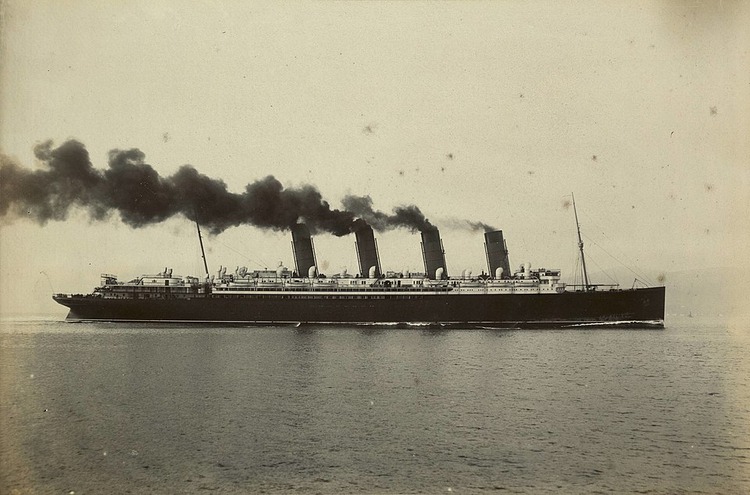
But not every ship has a grand-sounding name like Imperator or Île de France. Some seem downright odd to modern ears—like Dora, Tyrrhenia, or Empire Ken. Though, as Boaty McBoatface shows, we’re not immune to silly-sounding names in the 21st century. Then there’s one ship name that, today, tends to make people do a double take: Lesbian.
At least three steamships have carried that name, launched in 1874, 1915, and 1923. Today, a name like Lesbian often raises eyebrows or leads to the occasional crass Facebook comment (ask me how I know). I even admit to being a little cheeky with the title of this particular post. But back then, it was perfectly ordinary.
The Name Lesbian—Then and Now
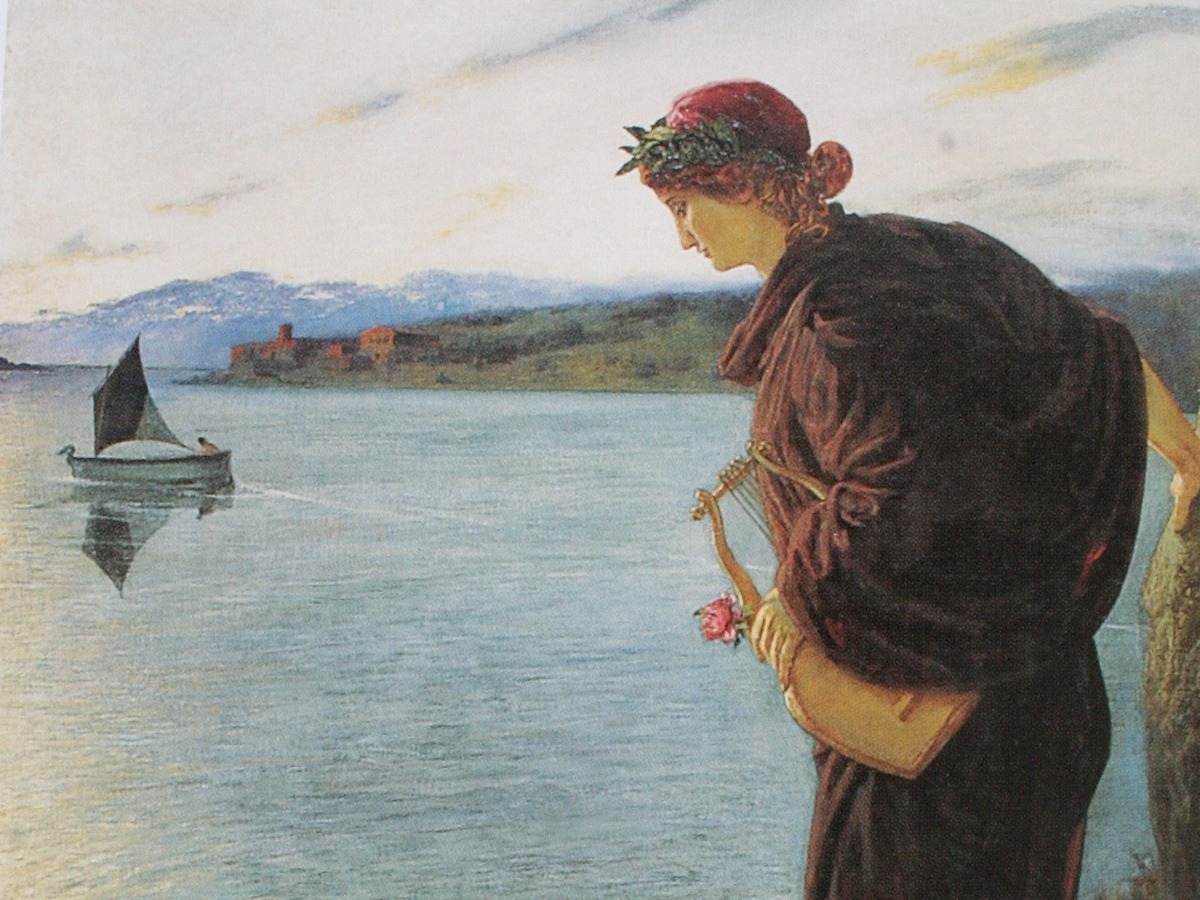
To us in the 21st century, the name SS Lesbian may seem odd, but it was perfectly ordinary in the 19th and early 20th centuries. The term Lesbian originally referred to an inhabitant of the Greek Isle of Lesbos, noted for poets like Sappho (who herself had several British and American naval vessels named after her). Lesbos also has a strong maritime tradition.

Many ship naming traditions in the 19th and early 20th centuries often drew inspiration from the ancient world. Cunard’s historic fleet, for example, included names like Lusitania (a Roman province covering parts of modern Portugal), Mauretania (North Africa), and Carmania (a region in what’s now Iran). Mythological figures, ancient cities, and historic provinces lent their names to many vessels over the centuries. In that context, naming a ship Lesbian was no more unusual than naming one Athenian or Selene.
It wasn’t until the late 19th century that the word lesbian began to acquire its contemporary meaning in the English language. During the Victorian era, people more commonly used the term sapphist to describe women romantically attracted to other women. The shift in meaning was gradual, becoming more prominent in the early 20th century.
SS Lesbian (1874)
The first SS Lesbian was a 1,559 GRT cargo liner launched in July 1874 by Thomas Royden & Sons in Liverpool, England. Built for the Leyland Line, the ship enjoyed a long career—something her successors wouldn’t have.

In 1878, the Lesbian towed the Sicilian to safety after her propeller shaft broke. A decade later, she grounded off Ottoman Bulgaria while sailing to Liverpool from Constantinople (modern Istanbul). The ship eventually re-entered service.
After serving the Leyland Line for decades, the Ellerman Line bought SS Lesbian in 1901 and renamed her Algeria. They scrapped her in 1903 at Livorno, Italy, ending her 29-year career.
SS Lesbian (1915)
W. Harkess & Sons of Middlesbrough launched the second SS Lesbian, a 2,555 GRT cargo ship, in 1915 for the Ellerman Line.
Unfortunately, there’s little information available about this Lesbian’s brief career. She likely operated between India and the United Kingdom. In December 1916, she departed Calicut (the Indian city of Kozhikode) carrying cargo for London.

On January 5, 1917, the German submarine U-35, commanded by Kapitänleutnant Lothar von Arnauld de la Perière, encountered the Lesbian. The Germans shelled and sank the cargo ship with their deck gun. She sank about 125 nautical miles from Malta. Although the entire crew survived the sinking, Kapitänleutnant von Arnauld de la Perière took the ship’s captain prisoner.

SS Lesbian (1923)
Swan, Hunter and Wigham Richardson Ltd of Newcastle upon Tyne built the third SS Lesbian, a 2,352 GRT cargo ship. They launched her on 31 July 1923 and completed her that September. SS Lesbian entered service for the Ellerman Line like her predecessors.

In peacetime, Lesbian saw steady commercial service. On May 24 1925, she ran aground at Kephez, Turkey but was successfully refloated days later. This seems to have been her only notable incident.
During World War II, SS Lesbian joined several Allied convoys between the Mediterranean and the UK. In 1940, she was seized by Vichy French forces in Beirut. During the 1941 Allied invasion, fearing she’d block the harbor if sunk, the Vichy authorities scuttled her offshore on July 14, 1941.
The Lesbian’s wreck was rediscovered in 2000, resting intact at a depth of 220 feet (67 meters) off the coast of Beirut. She has since become a popular dive spot.
“Someone will remember us / I say / even in another time”
Names and words carry history and meaning, but they aren’t static—they evolve along with language and culture. The stories of the three Lesbians remind us that what began as a straightforward geographic reference can take on entirely new significance over time. It reflects how words and names shift in meaning—sometimes in surprising ways—shaped by changing social contexts and perspectives.
Yes, even if it makes us snicker today.

Leave a Reply