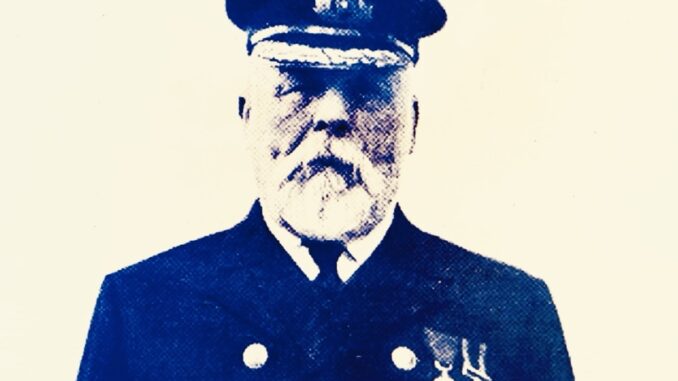
When the Titanic set sail on her maiden voyage in April 1912, White Star Line put her in the hands of a man widely regarded as the best in the business: Captain Edward Smith. Known as the “Millionaire’s Captain,” Smith had become a trusted face on White Star Line’s most prestigious ships. “He was a man in whom we had entire and absolute confidence,” J. Bruce Ismay later said. Passengers loved him. The company loved him. Nearly forty years at sea had forged his reputation—calm, capable, and trusted by all.

Just a few years earlier, Captain Smith had summed up his long career with a single word: “uneventful.”
A Calm Career at Sea
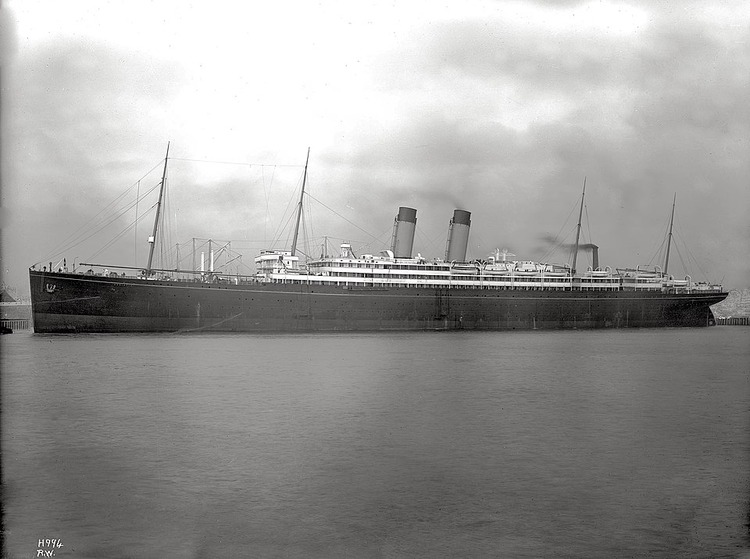
On May 16, 1907, the new RMS Adriatic arrived in New York for the first time. Speaking with reporters, he reflected on his many years at sea:
When anyone asks me how I can best describe my experience in nearly forty years at sea, I merely say, uneventful. Of course there have been winter gales, and storms and fog and the like. But in all my experience, I have never been in any accident…or any sort worth speaking about.
Smith went on to say he’d only ever seen one vessel in distress, had never witnessed a wreck, and had never once been involved in a situation that “threatened to end in disaster of any sort.” He joked that he was “not very good material for a story.”
It was a statement that spoke to his confidence, yes—but also to a growing belief in the invincibility of modern ocean liners.
A Fateful Quote
What came next, though, would go down in history as perhaps the most fateful words in maritime history:
I will go a bit further…I will say that I cannot imagine any condition which could cause a ship to founder. I cannot conceive of any vital disaster happening to this vessel. Modern shipbuilding has gone beyond that.
Even 118 years later, it’s hard to read those words without a chill.
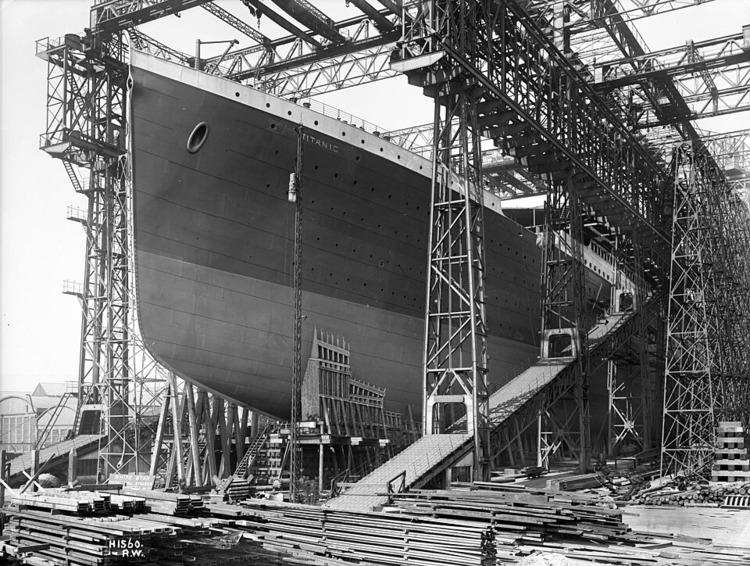
But Captain Smith wasn’t speaking in arrogance—he was once described as “modest, dignified, appreciative.” Most other accounts of him corroborate this assessment. Rather, Smith’s words captured the unshakable faith of the Edwardian era. They trusted in technology, in progress, in steel and steam. The idea that a ship like Titanic could be sunk by something like an iceberg was completely unfathomable.
That confidence in modern shipbuilding seemed justified just months earlier, in September 1911. Titanic’s sister ship, Olympic, collided with the British warship HMS Hawke. Despite severe damage, Olympic stayed afloat and limped back to port—proof, it seemed, of her unsinkability. For Captain Edward Smith, then master of the White Star Line flagship, this was his first major accident at sea.
A Reputation That Sank with the Ship
Five years after Captain Smith spoke those fateful words aboard Adriatic—and less than a year after Olympic’s collision with HMS Hawke—tragedy struck. Titanic struck an iceberg in the North Atlantic and sank in the early hours of April 15, 1912. More than 1,500 people lost their lives, including Captain Edward Smith.

And with him went not only his life, but the illusion that modern ships were immune to disaster. The Titanic disaster shook the Edwardian world to its core. Never again would people be quite as confident with their technological marvels.
In the weeks and months after the sinking, newspapers and books widely reprinted Captain Smith’s 1907 interview. What had once sounded like quiet assurance now seemed tragically ironic. He had never seen a wreck—until he was at the center of the most famous one in history.
Final Reflections
After the Titanic disaster, opinions of Captain Smith ranged widely—some saw him as a hero, others as negligent or even reckless. Some paint him as a tragic figure—revered but overwhelmed—while others accuse him of hubris or inaction. But perhaps the truth is more complicated. He may have simply been a man who, like many of his generation, sincerely believed the age of shipwrecks had passed due to the recent rapid innovations in shipbuilding.

Sadly, the sea—and history—had other ideas. We’ll never know if Captain Smith thought back to what he’d said in 1907 as the grand Titanic sank beneath him. His fateful words still echo, over a century later—a reminder that no ship, no matter how advanced, is truly unsinkable.

The actual quote was from an interview in 1909:
I will not assert that she is unsinkable, but I can say confidently that, whatever the accident, this vessel would not go down before time had been given to save the life of every person on board. I will go a bit further. I will say that I cannot imagine any condition that would cause the Adriatic to founder. I cannot conceive of any fatal disaster happening to this ship. Modern shipbuilding has reduced that danger to a minimum.
Interesting! The quote I used (and had always heard) came from a 1912 New York Times article, transcribed on Encyclopedia Titanica: https://www.encyclopedia-titanica.org/disaster-at-last-befalls-capt-smith.html.