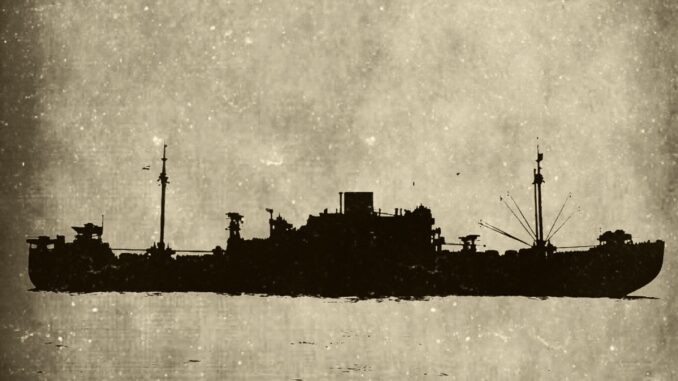
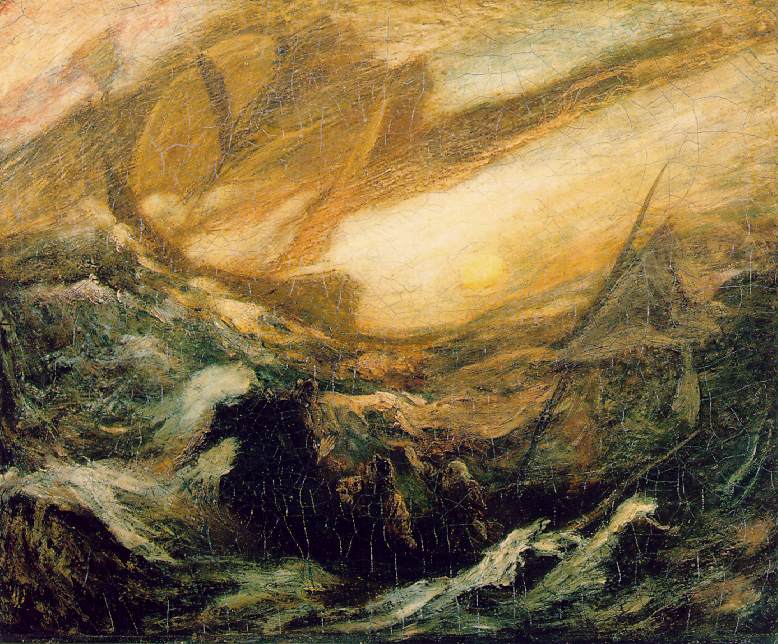
Maritime lore brims with tales of ghost ships—stories sailors pass along until distance, fear, and time blur them. Some, like the legendary Flying Dutchman, live in myth. Others, like the Mary Celeste and the Carroll A. Deering, were real ships found adrift, their crews mysteriously missing.
Repeated retellings have blurred the line between fact and fiction. One of the most chilling examples is the terrifying story of the SS Ourang Medan, a Dutch freighter said to have exploded and sunk in February 1948. Many versions of the story exist, but they all begin the same way.
The Legend of the Ourang Medan
“S.O.S. from Ourang Medan. We float. All officers including the captain, dead in chartroom and on the bridge. Probably whole of crew dead. I die.”
The Morse code transmission crackled through British and Dutch listening posts in February 1948, with several American ships also picking up the cryptic call. No coordinates accompanied the message, but triangulation placed the source somewhere in the Strait of Malacca.
The American freighter SS Silver Star altered course to render assistance. There had been no further communications from the Ourang Medan, so the crew prepared themselves for the worst.
When the Silver Star found the Dutch cargo ship several hours later, it was immediately clear that something was wrong. The Ourang Medan drifted aimlessly, and her decks were silent and still. Calls over the megaphone went unanswered. Not a soul stirred aboard the vessel.
The Silver Star’s crew formed a boarding party and dispatched a boat to the ship. As the Americans clambered onto the dead ship’s boat deck, tension was high—they knew something was wrong but had no idea what.
Then they saw the bodies.
Dozens of Dutch sailors lay sprawled on their backs. But the worst part was their faces: frozen wide-eyed, mouths twisted open in silent screams. Not a mark on any of them. No blood. No wounds. Just terror etched into every expression.
The men pushed belowdecks, bracing themselves for what they might encounter. In the boiler room—normally sweltering—they found the temperature unnaturally cold. Frigid, even. More crew lay collapsed on the deck, some already decomposing. Their expressions matched the same horrifying grimace as the men above.
On the bridge, the captain and his officers lay exactly where the distress call had indicated—frozen in death like the rest of the crew. Even the ship’s dog lay on its back, lips curled in a vicious snarl, as if it too had glimpsed some unspeakable horror.
Next to the bridge was the radio room. The operator who had tapped out the S.O.S. still sat hunched over the set, his finger resting on the telegraph key. Whatever he had witnessed in those final moments, he’d died sending his last warning.
With no survivors and no evidence of struggle, the Americans found themselves completely baffled.
Everything else aboard the Ourang Medan seemed normal. Tools sat neatly in their racks. Meals lay half-finished in the mess. Navigation charts remained spread across the table. It was as if life aboard the ship had simply stopped in one terrible instant.
The boarding party returned to the Silver Star, shaken. The captain decided to take the derelict ship in tow so investigators could determine what had happened. But as sailors secured the tow lines, smoke began belching from one of the cargo holds.
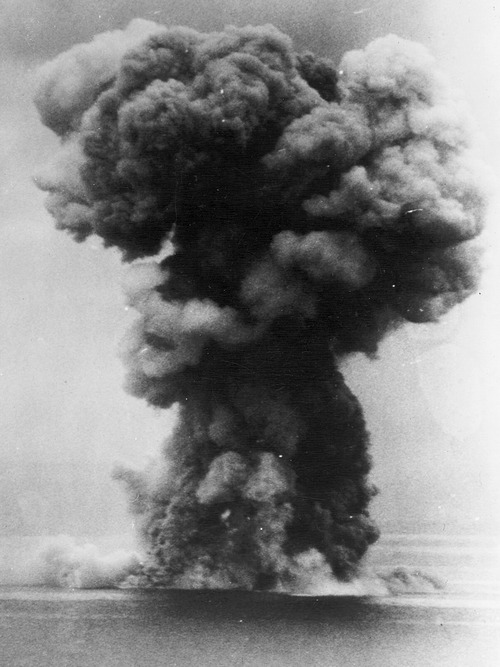
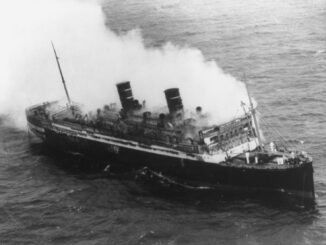
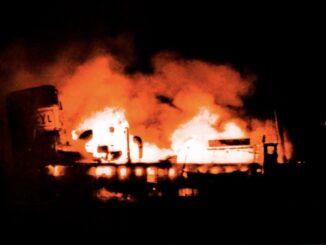
The lines were cut immediately. The Silver Star backed away just as the Ourang Medan erupted in a spectacular fireball. The blast split her hull apart, and the freighter silently slipped beneath the surface. She took her dead crew with her, and they—and the mystery of their final moments—now rest at the bottom of the Strait of Malacca.
Was the Ourang Medan Real?
Despite its chilling details, historians and maritime experts consider the SS Ourang Medan a legend rather than a documented event. No shipping records confirm a vessel by that name, and there are no logs, insurance claims, or official reports of the disaster. Even the date of the incident varies—one version places it in 1939 and another in 1947. The SS Silver Star existed, yet nothing links her to the chilling events of the Dutch ghost ship.
So where does the story come from?
Investigating the Mystery
Most accounts of the Ourang Medan come from sensationalist newspaper articles, often citing the Associated Press, and from secondhand retellings—the earliest dating to 1940. Each version seems to add new horrors, further blending fact and fiction. I’m sure my own retelling above even added elements not found in the earliest accounts.
The Ourang Medan story likely drew inspiration from stories of earlier ghost ships, namely the schooners Octavius and Jenny. In October 1775, the whaler Herald supposedly discovered the Octavius off Greenland, its crew frozen and preserved below deck. The captain sat in his cabin, pen in hand, having just completed his final log entry on November 11, 1762. Likewise, the whaler Hope found the Jenny frozen in the Drake Passage in September 1840. Her captain’s last log, dated January 17, 1823, recorded her final port of call as Callao, Peru.
All three accounts share a common element: unexplained gaps between the crew’s deaths and the ships’ discoveries. Abandoned vessels, frozen or dead crews, mysterious circumstances, and the supposed eyewitness accounts that survived all point to a recurring pattern in maritime lore. These similarities suggest that the legend of the Ourang Medan grew from the tales of earlier ghost ships, merging mystery and humans’ enduring fascination with the unknown.
Conclusion
The story likely endures not because it was real, but because it taps into our collective fear of the unknown. It plays on our primal fears about isolation, the vastness of the ocean, and forces beyond human understanding. That’s probably why we, as a species, enjoy spooky stories so much.
In that sense, the legend of the Ourang Medan sails on, not just as a story of maritime horror, but as a mirror of our own unease with the unseen and the unexplained, haunting our imagination as vividly today as it supposedly did in the Strait of Malacca that horrifically fateful day.
Leave a Reply