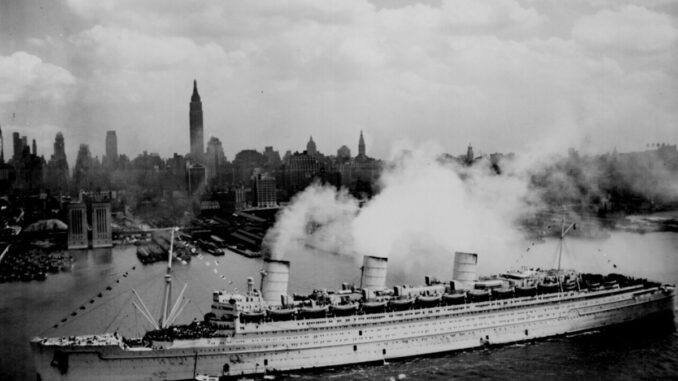
In September 1939, the RMS Queen Mary was returning to the United States from England on the eve of war. She carried 2,332 passengers—many of whom were fleeing Europe for the safety of the neutral United States. Among the Queen Mary’s many passengers on that voyage was entertainer Bob Hope and his wife, Dolores. Great Britain declared war on Nazi Germany while the ship was in the middle of the Atlantic. The mood onboard darkened as blackout curtains were put up to conceal her from enemy U-boats.
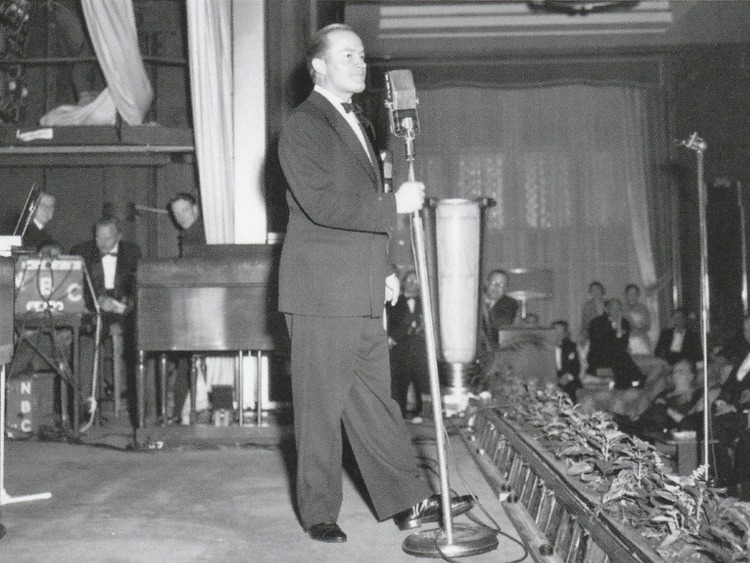
To ease the tension onboard, Captain R.B. Irving allowed Bob Hope to perform an impromptu show in the First Class Main Lounge—a moment of levity in an otherwise grim voyage. It’s also been said that this marked the first time he performed “Thanks for the Memory” to a live audience. It would later become his signature song.
Hope on the High Seas
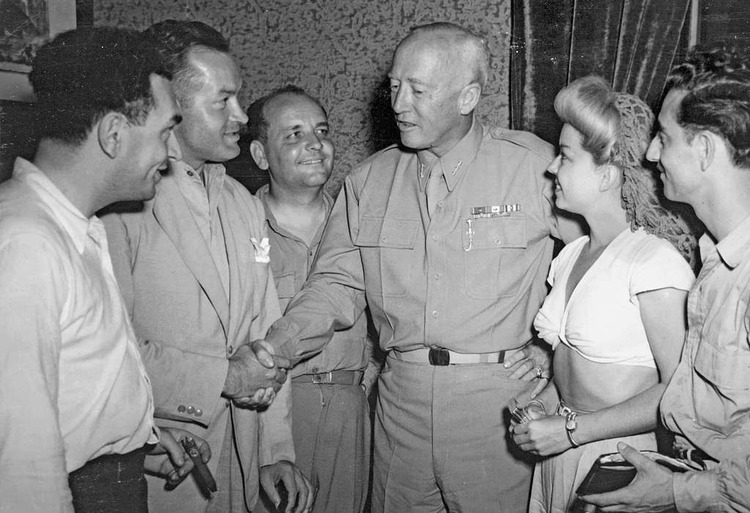
That bleak wartime crossing marked the beginning of Bob Hope’s association with the Queen Mary and the war effort. Throughout World War II, Hope became a tireless morale booster. “Old Ski Nose” extensively traveled with the United Service Organizations (USO) and performed for Allied troops worldwide.
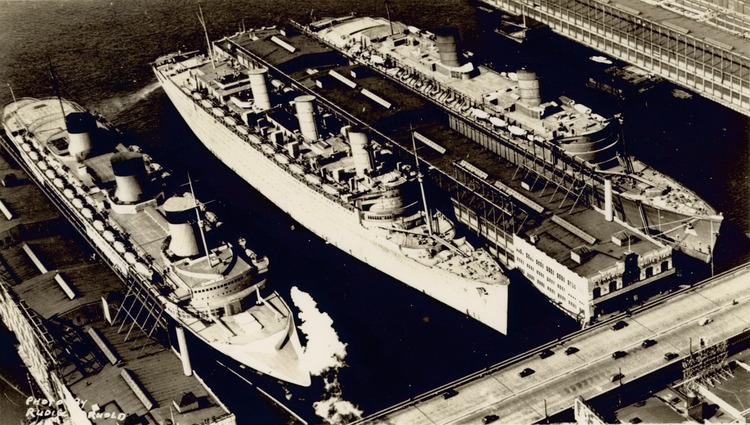
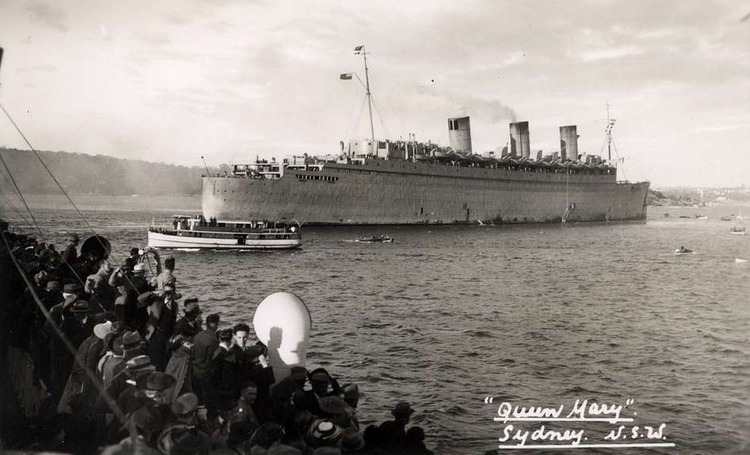
The Queen Mary herself was pressed into service as a troopship and carried over 810,000 Allied soldiers by war’s end. She would also carry Bob Hope several more times during the conflict. On two of those crossings, a young Army medic named Robert R. Copeland was serving aboard as part of the ship’s hospital staff.
A Medic’s Missed Shows
In his 1989 memoir, Warrior Without Weapons: An Army medic’s life aboard the Queen Mary during World War II, Copeland reflects on those crossings with humor:
The Bob Hope Show traveled to England twice aboard the Queen Mary while I was doing my tour of duty. As usual, I was too busy in the hospital and missed all the shows.
But despite missing the performances, Copeland had unexpected personal encounters with both Jerry Colonna and Bob Hope—memories that would stay with him for the rest of his life.
A Chance Encounter
One such memory came during a relatively quiet eastbound crossing. With so few patients on board, the hospital had temporarily closed off one of the wards. Copeland was headed to the lab one evening when he heard something strange in a vacant ward.
I opened the door and switched on the lights, and there in the center of the room stood Bob Hope!
“How in the hell do I get out of this place?” he demanded.
Copeland responded with both confusion and amusement:
“No problem, Mr. Hope. I was just wondering how in the hell you got in…you must have come in through the wall.”
“No I didn’t. I was outside and saw that door there and just walked in quick-like to get out of the wind and rain…and it closed on me…and there’s no knob to re-open it,” he explained.
And it was true. There had been a cabinet in front of that door, so there was no knob on it. We never used it as a door, and I had forgotten it was there.
The medic showed an exasperated Bob Hope out.
Thanks for the Memory
Before parting ways, the young medic extended an offer to the famous comedian:
I escorted Mr. Hope out through the lab, and in an effort to be friendly, and perhaps also to have something to tell my grandchildren offered him a tour of the hospital.
“No thanks… hospitals give me the creeps!” And with that, Mr. Bob Hope left my life forever.
A simple, one-on-one moment—nothing dramatic, no punchlines, no cameras. But for Robert Copeland, it was a brush with a legend he never forgot for as long as he lived.

Leave a Reply