Few tragedies have captured the world’s imagination quite like the sinking of RMS Titanic on April 15, 1912. More than a century after her ill-fated maiden voyage, the ship continues to inspire new works of art, fiction, and film. But among the familiar narratives of star-crossed lovers, heroism, and tragedy, there are stories still waiting to be told—stories that challenge conventional retellings and give voice to those history has often overlooked.
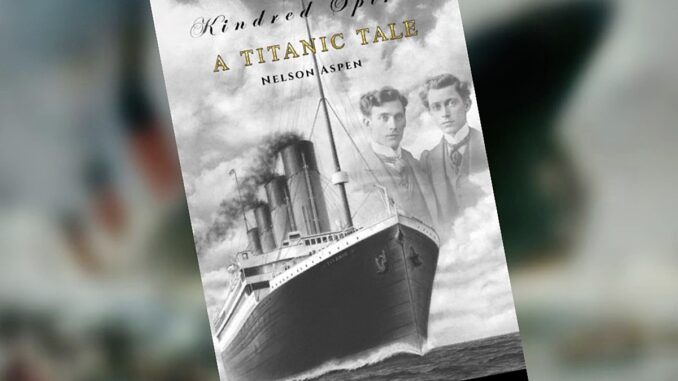
Nelson Aspen’s Kindred Spirits: A Titanic Tale is one such story. It follows the unexpected supernatural bond between two gay men separated by more than a century—one lost on the Titanic, the other adrift in modern-day Manhattan. Through this connection, Aspen offers readers a moving story on identity, resilience, and the universal human desire to be truly seen.
Book Summary
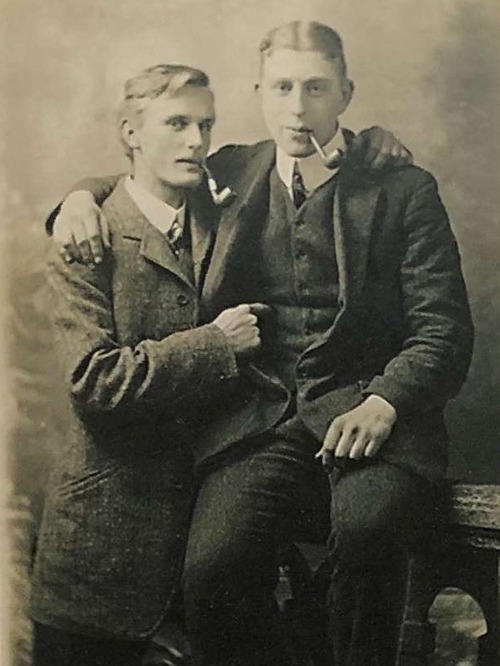
On April 14, 1912, Titanic passenger Milton Long meets John “Jack” Thayer III just hours before the fateful iceberg strike. The two hit it off immediately, spending several pleasant hours together in conversation. Milton—a gay, 29-year-old “gentleman of leisure”—is quickly smitten. He looks forward to getting to know Jack better over the remainder of the voyage. Sadly, fate intervenes.
The two meet each other again in the ensuing chaos, and stick together until shortly before the Titanic founders. Jack survives the sinking, but Milton is lost. His final memory is of the icy, churning black water of the North Atlantic engulfing him.

In a letter to Milton’s parents shortly after the sinking, Jack Thayer recounted the moment the two men abandoned ship:
We hurried back and stood by the rail about even with the second funnel. She started to shoot down fast at an angle of about thirty degrees. We shook hands, said goodbye and wished each other luck. We did not give each other any messages for home, because neither of us thought we would ever get back. Then we jumped upon the rail. Your son put his legs over the side, holding onto the rail with his hands, he looked up at me and said, “You’re coming, boy, aren’t you?” I replied, “Go ahead, I’ll be with you in a minute.” He let go and slid down the side and I never saw him again.
In 2024, Preston Spaulding is a struggling actor in Manhattan who’s approaching his 30th birthday. One night, while out at a gay club, he begins feeling unusually tired and leaves early. Over the following weeks, a series of Titanic-related coincidences occur that lead him to suspect he might have a past-life connection to the disaster. Preston confirms his suspicion when Milton’s still-living consciousness begins interacting with him. They are effectively two souls inhabiting a single body. Neither understands how or why this has happened, but together they resolve to explore the mystery by delving deeper into the Titanic’s history.

As their bond grows, both men learn from one another, each quietly reshaped by their connection. Preston meets a man named Todd and begins building a more meaningful life. At the same time, Milton glimpses, through Preston, the freedom to live openly as a gay man—something totally unimaginable in 1912. It’s a new world for both men.
My Thoughts
The Titanic disaster has inspired countless artistic interpretations over the past century. Numerous paintings, books (fiction and non-fiction), musicals, movies, and documentaries all examine one aspect of the disaster or another. Some, however, stand above the rest: Walter Lord’s A Night to Remember (1955), James Cameron’s Titanic (1997), and virtually every painting by Ken Marschall immediately come to mind. In my view, Nelson Aspen’s Kindred Spirits belongs in that distinguished company.
Kindred Spirits thoughtfully explores several themes, most notably the different experiences of LGBTQ+ people in the Edwardian era and today. As Milton sees the 21st century through Preston’s eyes, readers gain a deeper understanding of how much has changed since 1912. The novel serves as a poignant reminder that LGBTQ+ rights—like many human rights—were hard-won, not freely given.

Beyond that, Kindred Spirits is a reflection on life itself and the value of truly living it. Preston, on the brink of turning 30, has been adrift in a life of wild parties, casual encounters, and professional uncertainty. Milton’s unexpected arrival becomes a stabilizing force, prompting changes that reshape Preston’s relationships, career, and sense of self. For Milton, it’s an opportunity to live free from the restrictions of Edwardian society. Kindred Spirits is a moving, life-affirming story about second chances—in more ways than one.
The book’s beautiful writing creates characters so vivid they feel like living, breathing people. Milton, Preston, Todd, and the rest each have distinct, authentic voices and personalities. Nelson Aspen clearly put a great deal of heart and soul into this story, and it shines through brilliantly. The book is witty, charming, and often funny, while also being deeply philosophical and spiritual. It’s a unique and thoughtful addition to Titanic lore.
Very rarely do I finish a book and feel a need to immediately re-read it, but this was one of those exceptions. For me, Kindred Spirits is an instant classic. I keep wanting to lose myself in its unique world again and again. Simply put: this is one of the best books I’ve ever read.
Conclusion
Kindred Spirits offers much more than the usual Titanic fare. It’s a timeless, imaginative story likely to appeal to fans of Titanic, historical fantasy, romantic fiction, the supernatural, and anyone drawn to stories that go beyond convention. It avoids tired clichés and refuses to exploit the tragedy for cheap drama.
It’s also a great addition to the slim body of work surrounding LGBTQ+ stories and the Titanic. The novel approaches its subject matter with sensitivity, never shocking for the sake of shock or veering into the gratuitous. Instead, it offers a thoughtful look at what it meant to be homosexual in 1912 and how much the world has changed over the last century.
By weaving together history, fantasy, and human experiences, Kindred Spirits invites readers to reflect on identity, love, and resilience in the face of tragedy. It challenges us to remember those often left out of traditional narratives. Furthermore, it reminds us that the past and present are never as distant as they seem—and that their intersections can alter the course of our lives.


I’m truly honored and touched that you were so moved by my story. The Night lives on!