
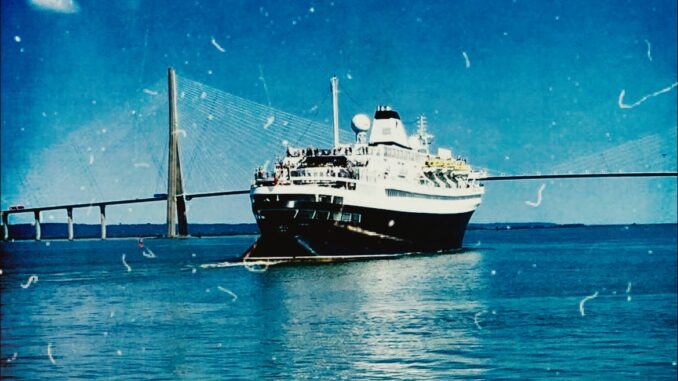
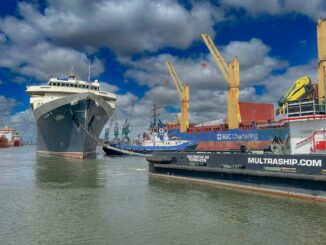
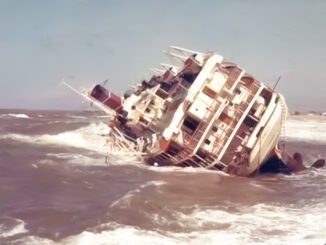
On June 17, 2025, MV Astoria—once MS Stockholm, infamous for her role in the Andrea Doria disaster—fetched €200,000 (about $230,000) at auction. The buyer, initially unnamed, has now been confirmed as Belgian recycling firm Galloo. The 77-year-old Astoria could depart Rotterdam for Ghent as early as next month.
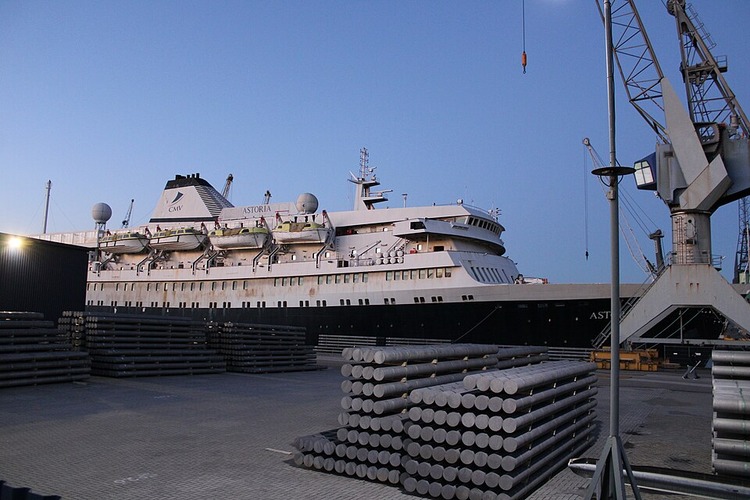
Difficult Going
The last few months have definitely been hard for ship enthusiasts. Several historic ships have had their fates seemingly sealed, and the Astoria is only the latest.
Late last year, MV Aurora (formerly Wappen von Hamburg) partially sank at her moorings in Stockton, California. She was subsequently towed to Mare Island for dismantling. Meanwhile, SS United States left her longtime berth in Philadelphia for Mobile, Alabama, where workers are preparing her for scuttling as an artificial reef off the Florida coast.

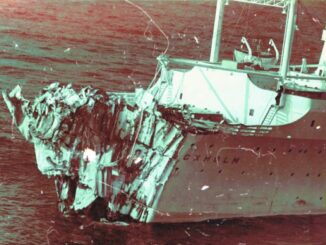
Watching all this unfold—especially with the Astoria—is truly disheartening. Before the COVID-19 pandemic, I dreamed of sailing aboard her. The ship’s long career made her all the more interesting to me. It was a chance to touch history and personally connect with the tragic events of July 25-26, 1956.
Tin Cans and Razor Blades
The news about Astoria’s scrapping is sad, but hardly a surprise. For as long as there have been ships, there has been a need to dispose of them at the end of their service life. Some of history’s greatest liners—Mauretania, Olympic, Île de France—met their end at the breakers, reduced to tin cans and razor blades.

Scrapping old ships is the norm—that’s what makes the few that escape the breakers so special. Look at Queen Mary and Rotterdam. They’re ultimately survivors of age and economic necessity, and transport visitors back to another time and place. But unfortunately, most vessels have an expiration date.
It reminds me of what Captain John Treasure Jones said in 1967 as he took RMS Queen Mary toward an uncertain future:
I’m always very sorry to see a very nice ship end its days, but it’s inevitable of course. But both ships and us have a, have a time limit and the day must come when we, when we, we go, and this applies to ships as to human beings.

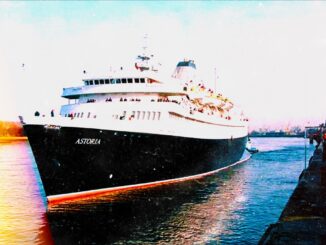
The inevitability doesn’t ease the loss of a ship like Astoria, however. She outlasted what her 1940s Swedish builders likely intended. As one of the few surviving links to the bygone age of ocean liners, Astoria is a true legend. The maritime world will deeply miss her.
Leave a Reply