Today, I’m starting off a new blog series where I chat with some of my favorite maritime bloggers, creators, and ship enthusiasts. First up is Milena from The Shipyard Blog, whose posts on maritime history and marine engineering grabbed my attention when I revived my own blog. She’s been a big help as I’ve navigated this brave new world of modern blogging (a bit different from the old Blogger days!), and I’m excited to sit down and chat with her today.

A huge thank you to Milena for agreeing to this idea! I’m hoping she’ll be the first of many great conversations to come in this series.
1. When did you start The Shipyard Blog, and what inspired you to start blogging in the first place?
I started the Shipyard Blog back in 2017. I was living in a landlocked country at the time and was desperate to stay closer to the shipping community. I missed daily contact with like-minded individuals, or simply talking about ships, shipbuilding, maritime history, and anything else related. Instagram was amazing, and still is, but I was also looking for long-form media. And since I am frightfully camera-shy, the blogging format felt more suitable.
2. How did your interest in ships start? Was there any particular event or moment that you can point to?
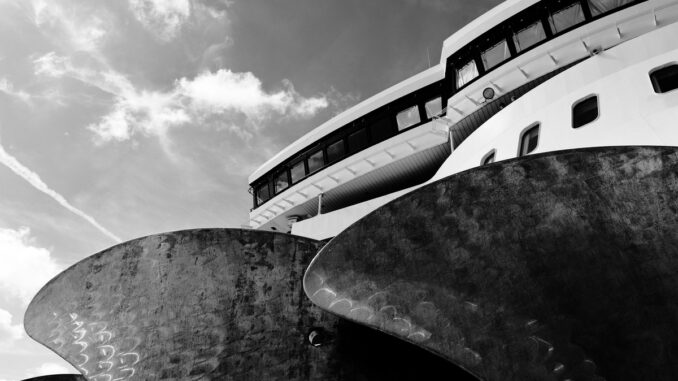
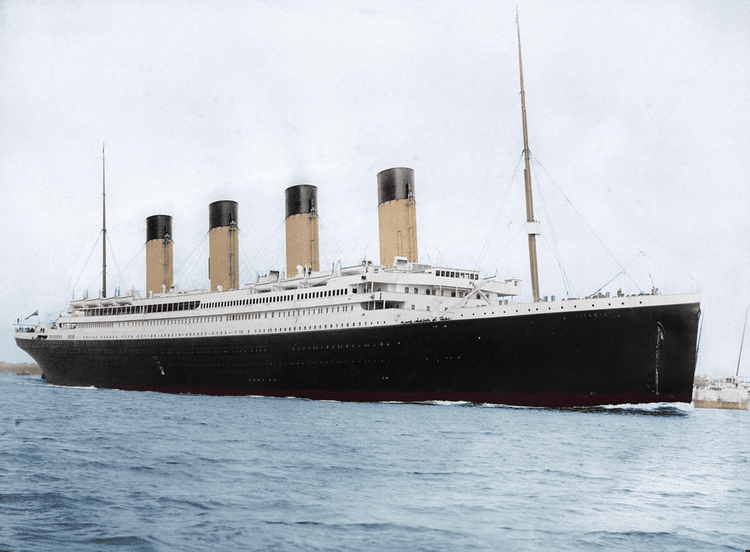
The first such event I can recall was when I was four years old. My parents were away for work, and my grandmother was taking care of me. When she was tucking me in for the night, I kept whining for a bedtime story. Can you guess which one she told me? The sinking of the Titanic! Haha! At that age, of course, I had no understanding of human tragedy, so the only part that stuck with me was how the propellers came out of the water and people in the boats could see them. This was years before the “Titanic” movie, so that scene must have unfolded in my imagination in rather bizarre ways. In any event, ships always attracted me after that. As a child, I loved maritime museums, watched every ship-related movie, and sniffed out every rusty old tub by the sea.
3. What’s your process for writing a new blog post? How do you decide what to write about?
Choosing topics is the easiest part. I have a long list in my head, with barely enough time to research even half of them. When I started out, I just wrote about whatever I was most excited about at that particular time – no plan, no schedule, nothing. As the blog got some traction, people messaged me with requests and ideas, so I was more than happy to select the ones that also interested me. I never follow trends, though, and I never publish anything I am not excited about. To attract and entertain the right audience, my focus is always on storytelling, the quality of research, and an authentic tone. Of course, this is not a lucrative monetization strategy, but I always remind myself of the other rewards involved.
Once I have decided on a topic, I start digging up all the materials I can find, including websites, other blogs, books, documentaries, and archives. Sometimes, if the topic is very niche and specific to a country, I use a translator to find more information in other languages. Anything related to the USSR, for example, is sparsely covered in English-language sources but explored in great detail by Russian ones. I always compare as many sources as possible to verify my information, or to add less-known details to the story.

What grabs readers in a good yarn are the characters, so I always dig for the real people in every story, rather than just technical facts. Don’t get me wrong, this in no way undermines my morbid fascination for machines, but what touches the heart is always the genuine human experience.
4. What do you particularly enjoy about blogging?
I enjoy the research process that leads to a good article, reading through the sources to discover curious facts or unconventional points of view. I realize that many of my posts are not quick reads, but I really feel that most stories on the Internet lack the context to bring them to life. Every historic event developed in a complex environment, every bizarre vessel was built for a reason, every disaster was caused by multiple factors. The best part about a curious ship is the story around her – the spirit of the times, the heroes and villains, the elation and disappointment involved in grandiose adventures.
The best part of blogging to me, though, is receiving feedback – experts who want to contribute facts or photos to a post, people who want to collaborate with me in some form, or those who are curious to find out more. I recently got a message from a lady who had traveled on forged British papers from France to Palestine back in 1947. Almost eighty years after the event, she wanted to remember the name of the ship, so I helped her locate it in the archives. It was a unique and satisfying experience.
5. What are some things you wish you’d known when you first started blogging?
So many people tell you how easy it is being a blogger – all you need is to set up a website, right? Well, that part is indeed easy, but no one ever talks about what follows. As it turned out, my engagement grew at snail-pace, hardly anyone bothered subscribing to my newsletter, and building an audience took years. In the meantime, I had to stay consistent and keep writing even when nobody read it. I wish I’d had a realistic idea of how things would be in real life, then maybe I would have saved myself a few disappointments along the way.
I also wish I had known a bit more about hosting options and website platforms, when I started out. Plenty of deals offer low prices in the short term but cost you lots of time and frustration down the line. Choosing the wrong option can slash your monthly visits and affect you ranking in search engines. Ignoring these technical issues slowed me down for years.
6. What are your Top 3 favorite ships and why?
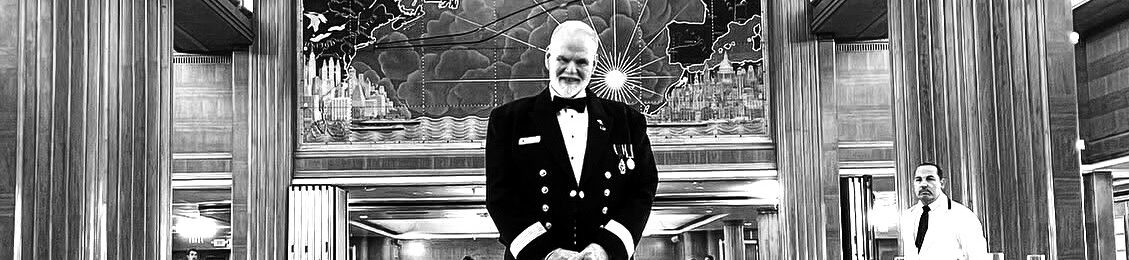
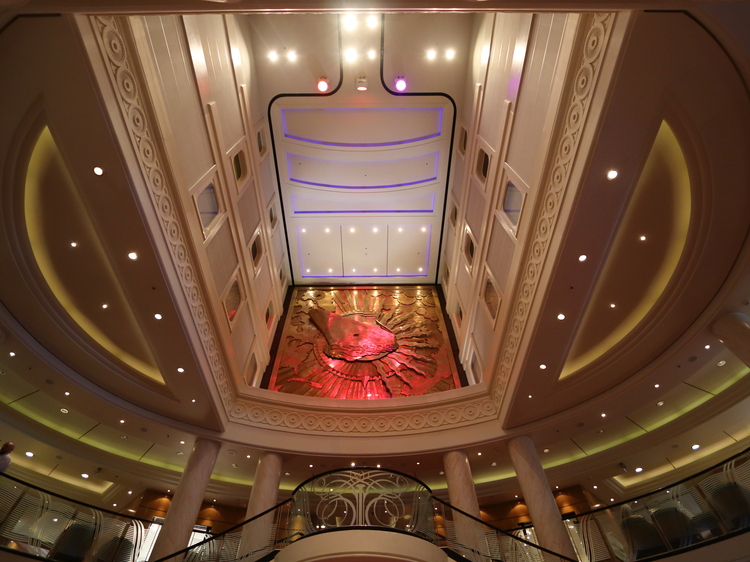
From the current passenger vessels, my absolute favorite is the RMS Queen Mary 2. Besides being the last ocean liner around, I find her a true marvel of naval architecture and marine engineering. I love her sleek, dark hull, the elongated bow, the black-and-white superstructure. Her interiors are breathtaking – the main lobby, the Britannia Restaurant, that classical teakwood promenade with vintage deck chairs – I can talk about her for days. And since formal dress is required in certain areas in the evenings, she somehow carries the spirit of the Golden Age of ocean liners. Long story short, I feel she offers the classical transatlantic experience without the technical inconveniences of the period.

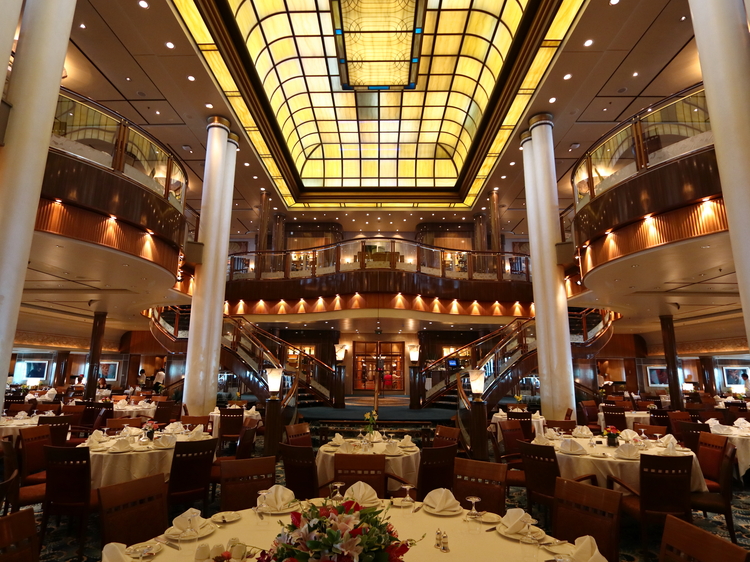
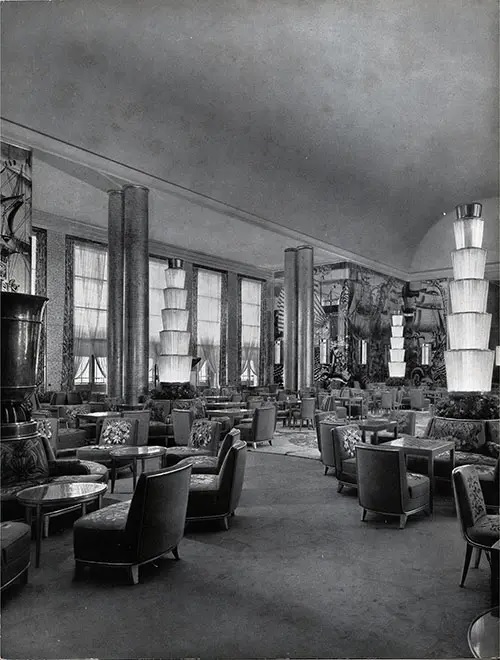
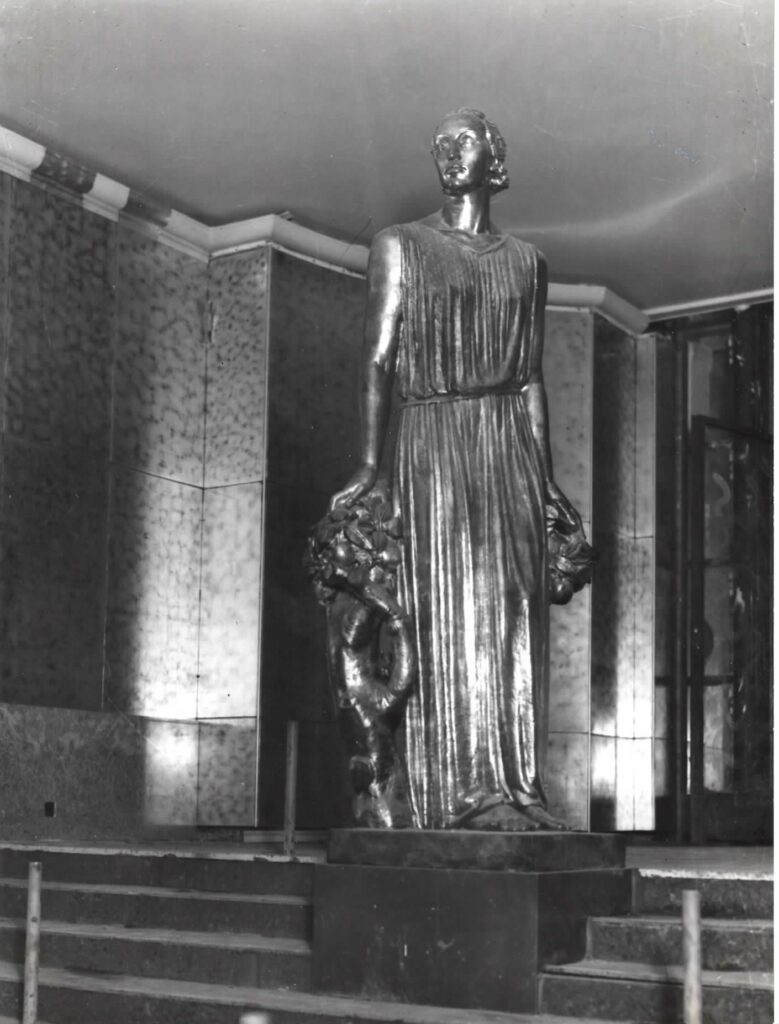
From the old passenger ships, my all-time favorite is the SS Normandie. The revolutionary lines of the hull, so boldly drawn by Vladimir Yourkevitch, really set her apart from other liners at the time. I am also fascinated with her Art Deco interiors, especially the first-class dining hall and the Grand Staircase. If I could go back in time and sail on one historic ship only, that would be Normandie, no hesitation.

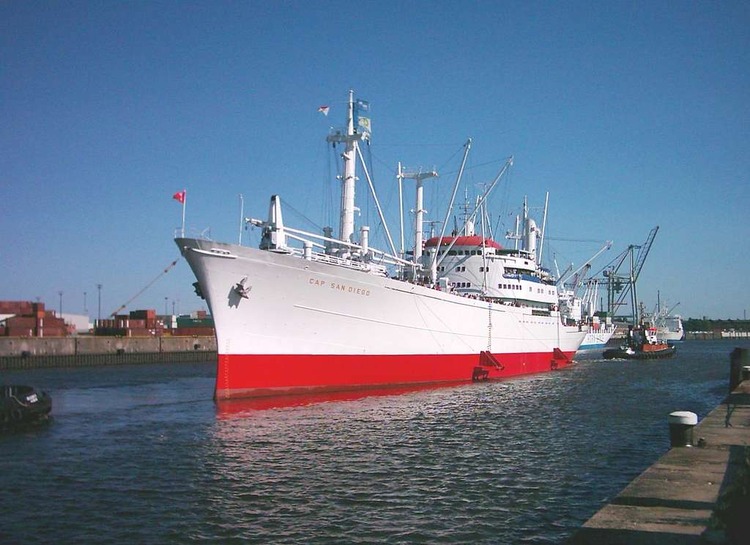
And out of the current merchant fleet, I am very partial to the Cap San Diego. She is one of the few tramps left around from before containerization and one of the last remaining “White Swans of the South Atlantic.” There is something about a white silhouette on a blue tropical sea. She is currently a museum ship in Hamburg, and you can explore her engine room and even walk along the entire length of the shaft, if you can handle tight spaces. Believe it or not, she is still seaworthy and even sails once in a while! German engineering and maintenance, I guess.


Wrapping Up
Thank you again to Milena for joining me for this Q&A—it’s clear her passion for ships runs deep. If you haven’t already, be sure to check out The Shipyard Blog. From whaleback ships to propeller cavitation, her posts cover it all, and I can’t tell you how much I’ve learned from reading them. Whether you’re a maritime history buff or just curious about the fascinating world of ships, you won’t be disappointed.
Leave a Reply