
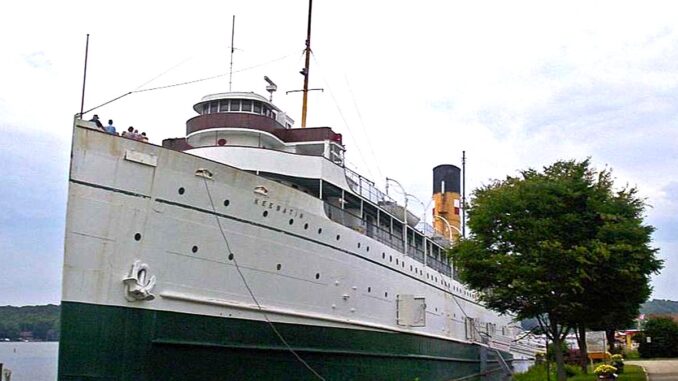
For the next installment of “The Last of the Liners” series, we turn to a smaller—but no less historic—vessel: the Canadian Pacific pocket liner SS Keewatin.
Launched in 1907, Keewatin was designed for service on North America’s inland seas, connecting Great Lakes ports for the Canadian Pacific Railway (CPR). She spent nearly sixty years in service—decades longer than most of her transatlantic cousins—and today, she is one of three surviving Edwardian passenger ships in the world. Keewatin, in fact, is the last liner from that legendary era that produced such iconic ships as the Titanic and the Lusitania.

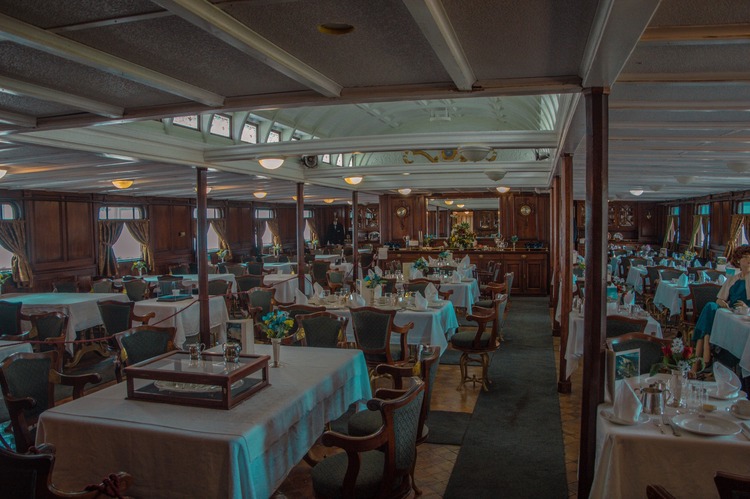
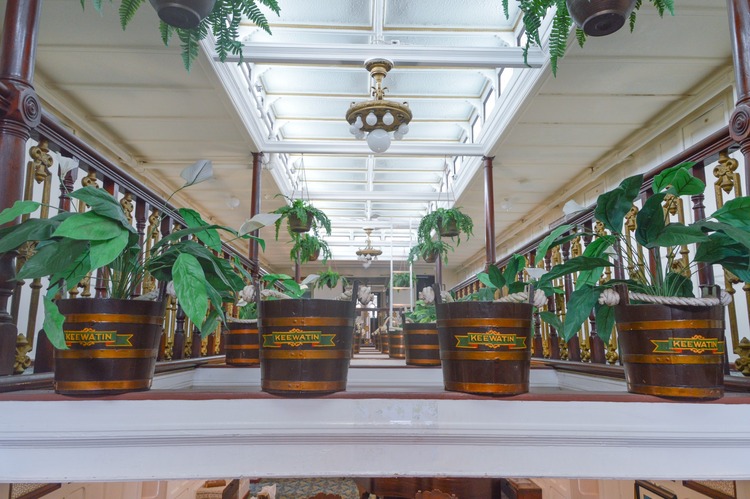
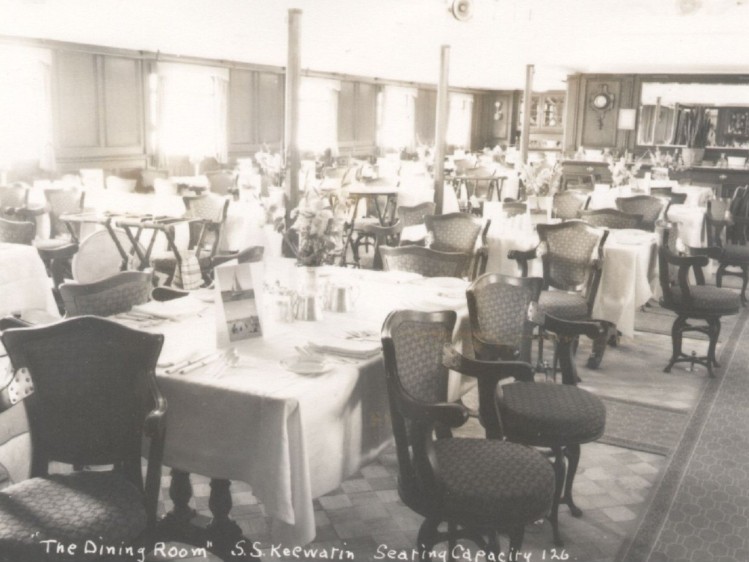
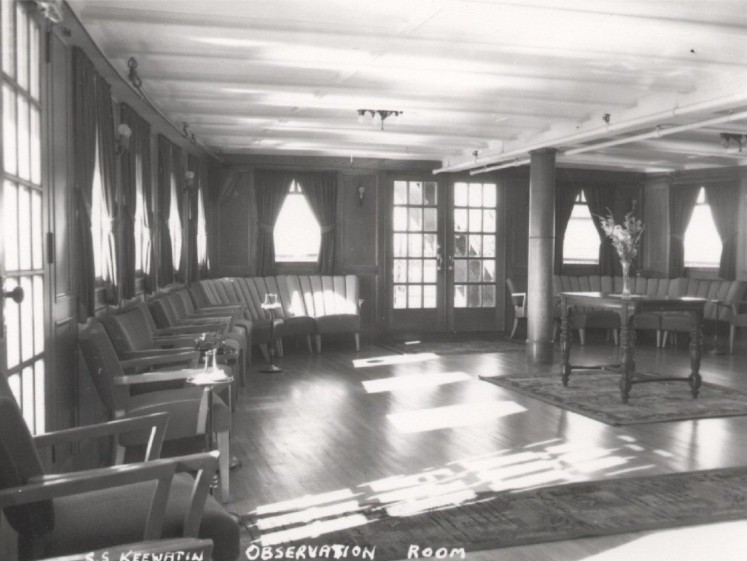
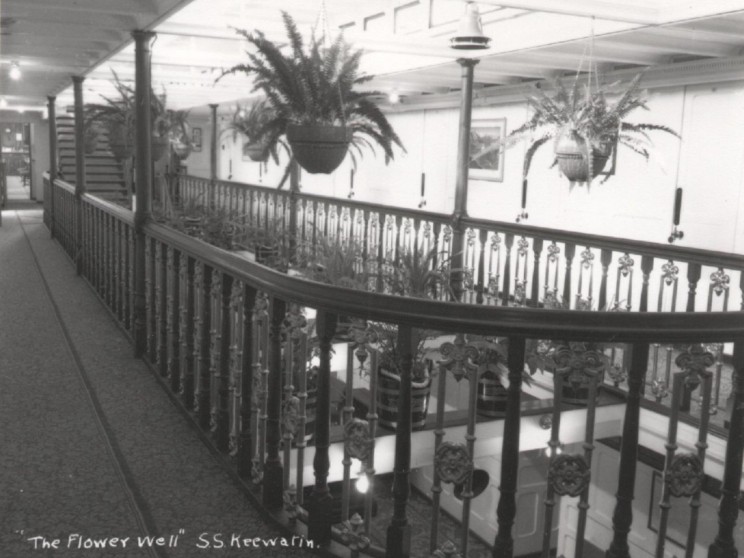
Now preserved at the Great Lakes Museum in Kingston, Ontario, Keewatin continues to welcome visitors aboard. Her wood-paneled rooms, grand staircase, and formal dining saloon still echo with the elegance of another age. As a classic pocket liner, Keewatin offered the luxury and amenities of the great transatlantic ships, but on a more intimate scale. In many ways, she feels like a miniature version of the legendary Atlantic greyhounds such as Mauretania, Olympic, and Empress of Ireland—capturing their splendor on a more condensed scale.
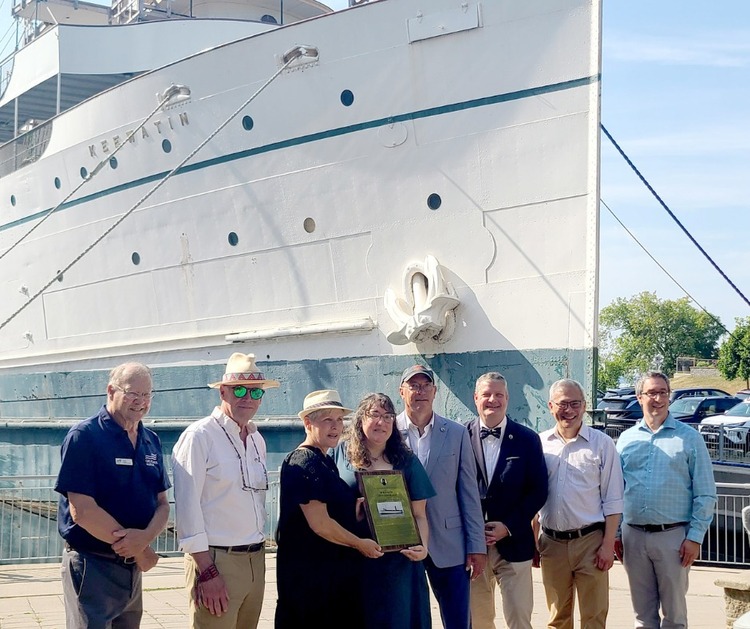
This past weekend, in fact, she received the Museum Ship of the Year award from the Steamship Historical Society of America. Just one ship receives the honor each year, and the nearly 120-year-old Keewatin absolutely deserves it.
Built on the Clyde
Commissioned by the Canadian Pacific Railway, the passenger liner took shape at Fairfield Shipbuilding and Engineering in Govan, Scotland. Known during her construction as Job No. 453, the ship took shape relatively quickly. Christened Keewatin, she slipped into the River Clyde on July 6, 1907. Workers completed her just two months later.
A modest-sized liner, Keewatin measured just over 336 feet (102.6 meters) in length and was 3,856 GRT. Power came from four coal-fired boilers and a quadruple-expansion steam engine—an advanced configuration for its day—delivering 3,000 horsepower to a single propeller. Her top speed was 16 knots (18 mph; 30 km/h), with a cruising speed of 14 knots (16 mph; 26 km/h).
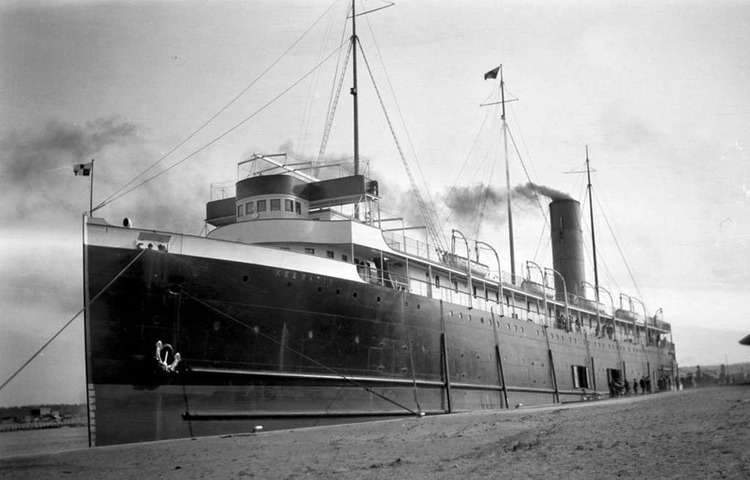
While smaller than her Atlantic cousins, Keewatin was no less elegant. Her public rooms were richly appointed with carved wood paneling and polished brass, evoking the refined atmosphere of an Edwardian hotel. Passengers dined in style, relaxed in lounges and a ballroom, and could even visit the shipboard barbershop. With 108 staterooms accommodating up to 288 passengers, Keewatin offered luxurious comfort on a more intimate scale. A crew of 86 kept things running smoothly onboard the little ship.
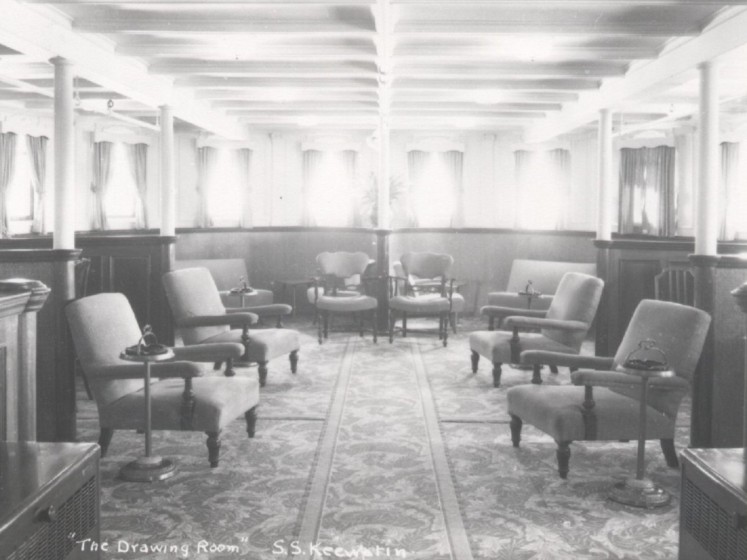
Keewatin sailed from Scotland on September 14, 1907. The ship arrived at the Davie shipyard in Lévis, Quebec, weeks later, on October 5. Shipbuilders carefully cut her in half—an unusual but necessary step, since the canals below Lake Erie, especially the Welland Canal, couldn’t handle a ship of her length. After transport, they reassembled her in Buffalo, New York. SS Keewatin officially began her service from Owen Sound, Ontario, on October 7, 1908.

A Long, Uneventful Career
Originally, Keewatin linked to CPR’s depot at Owen Sound to Fort William and Port Arthur on Lake Superior. Alongside her sister ship Assiniboia—and earlier fleetmates Manitoba, Athabaska, and Alberta—she provided a seamless connection between rail and steamship. The journey took two and a half days each way, including a half-day transit through the Soo Locks. Keewatin proved a reliable ship—she reportedly never missed a sailing in her working life.
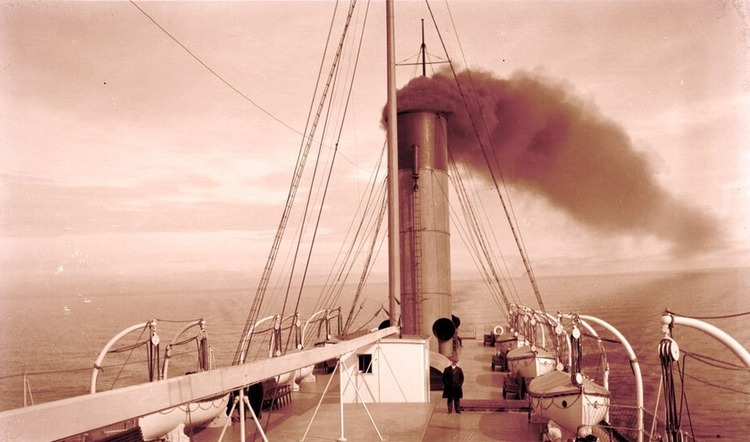
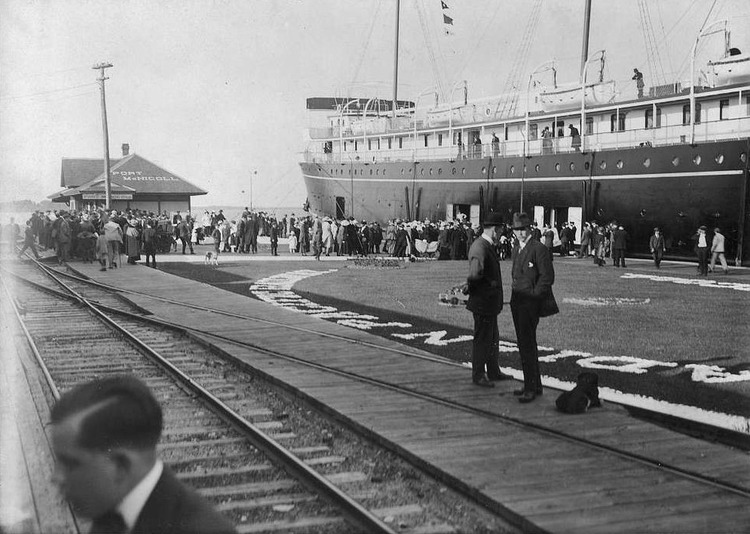
In 1912, CPR opened a new “super port” at Port McNicoll, Ontario, which replaced Owen Sound as the eastern rail terminus. Known for a time as the “Chicago of the North,” the port thrived for decades—until the opening of the Trans-Canada Highway in 1965 rendered the rail-ship link obsolete.
Throughout her long career, Keewatin received several safety upgrades. In 1950, crews retrofitted her with a sprinkler system, added fire bulkheads, and replaced her original wooden masts with steel ones. This was in response to the 1949 fire aboard SS Noronic, another Great Lakes steamer. Despite the upgrades, Keewatin’s wood-paneled cabins and wooden superstructure continued to raise safety concerns. In the end, the cost of rebuilding and replacing them proved too high.
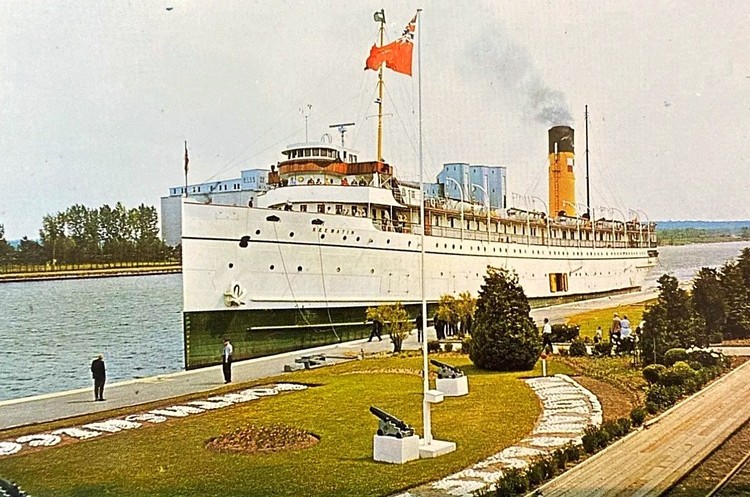
With dwindling passenger numbers, Keewatin finished her final passenger run on November 29, 1965—ironically, just two weeks after another ship with a wooden superstructure, the SS Yarmouth Castle, caught fire and sank near the Bahamas. She ran a freight-only service in 1966, but Keewatin’s time was up. On November 8, Canadian Pacific sold her to Marine Salvage Ltd. of Port Colborne for scrapping.
A Second Chance at Life
Unlike so many old ships that end their days in the scrapyard, Keewatin got something incredibly rare—a second chance at life.
In January 1967, a Michigan entrepreneur named Roland J. Peterson Sr. purchased her for $37,000—more than scrap value—and brought her to the Kalamazoo River in Douglas, Michigan. There, the liner became the Saugatuck Maritime Museum, welcoming visitors aboard for more than four decades.
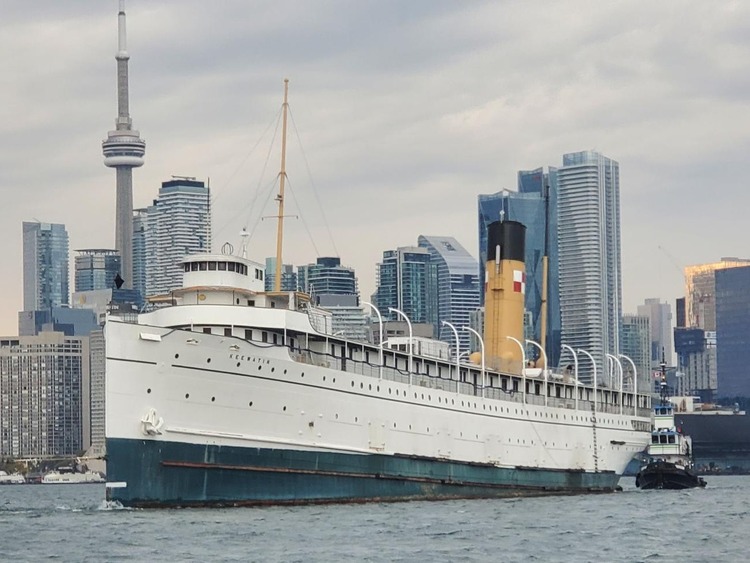
In 2011, Keewatin changed hands again, sold to Skyline International Developments Inc. Thanks to a carefully dredged channel and a dedicated crew, she was towed from the Kalamazoo River into Lake Michigan and began the long journey back to Canada. By June 2012, Keewatin returned to Port McNicoll, Ontario, greeted by a joyful celebration that honored both her rebirth and the proud legacy of Great Lakes passenger travel.
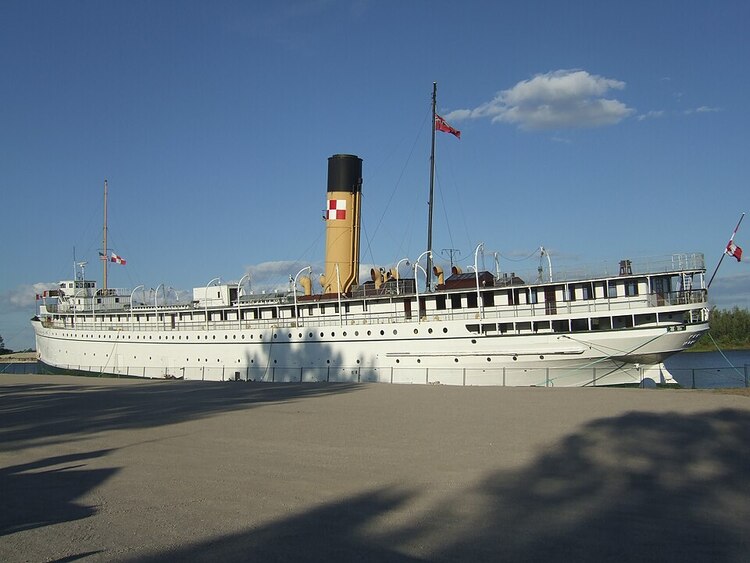
Though plans to relocate her surfaced over the following years, Keewatin remained at Port McNicoll as developers incorporated her into mixed-use redevelopment proposals. When those plans faltered in 2020, Skyline Investments chose to donate the ship to the Great Lakes Museum in Kingston, Ontario.
In April 2023, after weeks of volunteer-led preparations, Keewatin departed Port McNicoll once more. She stopped for repairs at the Heddle Shipyards in Hamilton before arriving under tow in Kingston on October 26, 2023. By May 2024, visitors were once again stepping aboard, as Keewatin reopened for public tours—carrying forward her remarkable legacy as the last Edwardian liner.
The Last of Her Kind
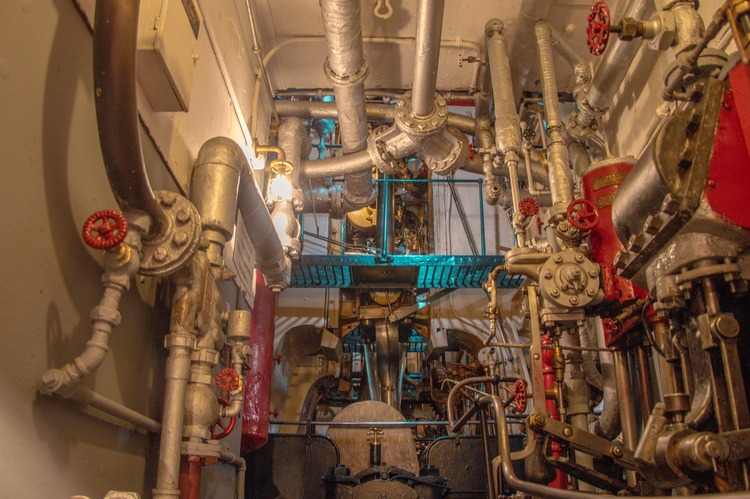
Today, the SS Keewatin is a tangible connection to a bygone era. From her elegant wood-paneled interiors to the preserved engine room, she offers visitors a rare glimpse into the golden age of passenger liners—scaled down for the Great Lakes.
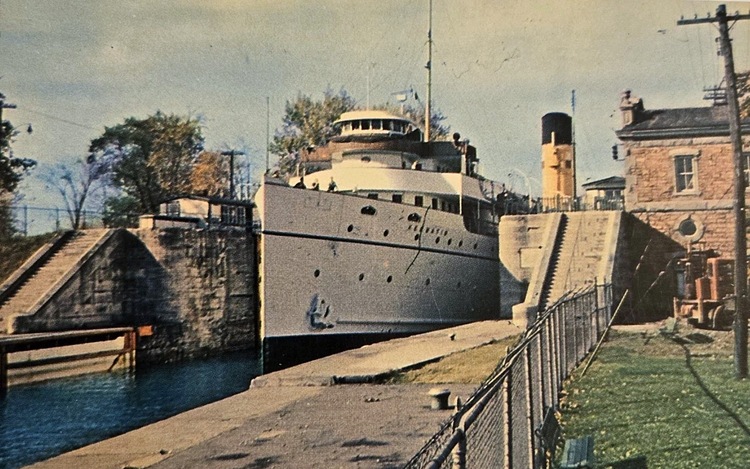
As the last surviving Edwardian passenger liner, Keewatin reminds us of the quiet dignity and craftsmanship that defined an era of travel long past but not forgotten. Her story is one of resilience, revival, and reverence. There simply isn’t another ship in the world like the Keewatin.

For anyone who steps aboard, this pocket liner isn’t just a museum ship—she’s a trip back in time. Keewatin preserves the spirit of the liners that once graced the oceans and inland seas. And with her doors open once again in Kingston, her legacy is set to inspire generations of maritime enthusiasts for years to come.
Leave a Reply